Can Non-Queer People Queer Design? (great question!)
On queering design, power, and the ethics of participation

There is a growing appetite in design spaces to "queer" everything—from data visualization to architecture to UX. And while it’s thrilling to see queerness take up space in disciplines long shaped by normativity and hierarchy, there’s a question that continues to surface in conversation, critique, and whisper:
Can non-queer people queer design?
To begin, we must ask: what does it mean to queer something?
To queer is not simply to make things fabulous, colorful, or even inclusive. To queer is to disrupt. It is a methodology of refusal. A refusal of binaries, of capitalist design imperatives, of extractive relationships to users, land, and labor. Queering is about seeing the world not as fixed, but as in motion—alive, complex, and in need of care.
As bell hooks reminds us, queerness is about the self that is at odds with everything around it—and must invent, must imagine, must resist.
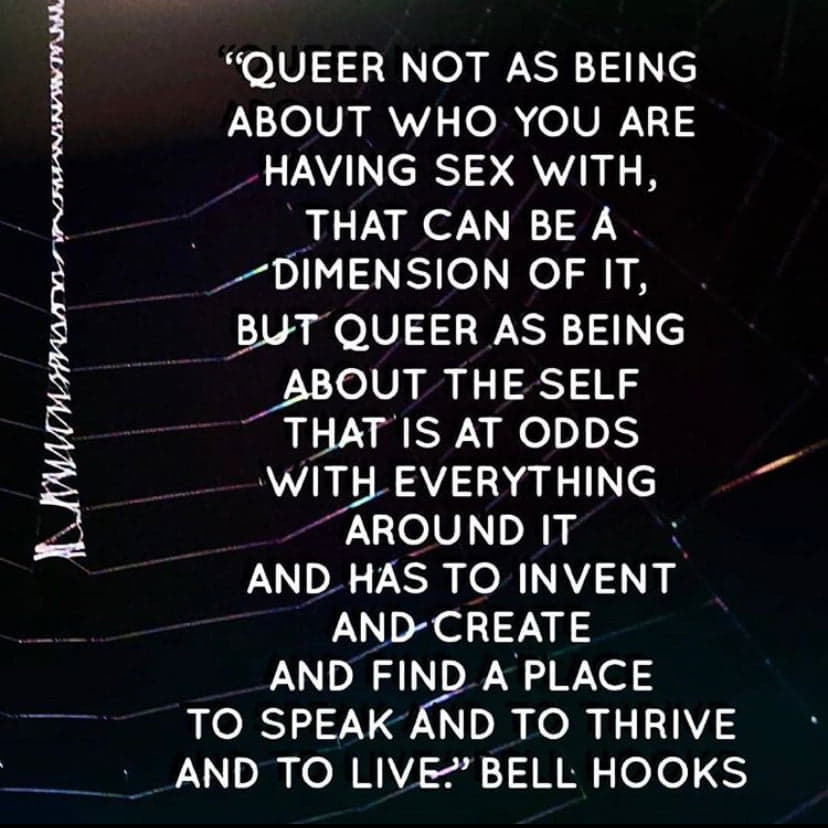
In this framing, queering design is not about aestheticizing queer lives. It is about non-normative ways of knowing and radical world-building. It is about being unruly with deep integrity. It is about possibility.
So, can non-queer people do this?
Maybe? I don’t want to hold this line - I’d rather ask us as a community of practioners to explore various answers and takes.
I do feel that to queer design is to enter into a political, spiritual, and relational commitment. It is not a theme or a toolkit. It is a way of being. Which means it is not about who you are only—but how you act, with whom, and toward what future.
The practice of queering design, requires a commitment to learning through discomfort, and to redistributing power. It means designing with, not for. It means treating design not as a site of mastery but of encounter. It means unlearning the desire to "fix" and instead cultivating the ability to witness, to hold, to be changed.
It means moving differently.
This work is not reserved for the identity-policed or the purist. But it does require that those who do not move through the world as queer take seriously the histories, violences, and possibilities that queerness holds. It requires asking: who benefits from me calling this "queer"? Who is harmed when I claim that?
The philosophical question here is really one about ethics: What does it mean to enter a tradition that was not made from your experiences, but might still transform you?
I’m not interested in gatekeeping—but I am deeply interested in stewardship. In accountability. In building a design culture rooted in care, interdependence, and transformative justice.
What do you think? ‘
With curiosity,
Sloan Leo Cowan